
Table of Contents
Why Kubernetes & Terraform Are Must-Have Skills in Any DevOps Certification
1. Why Kubernetes and Terraform Rule the DevOps World
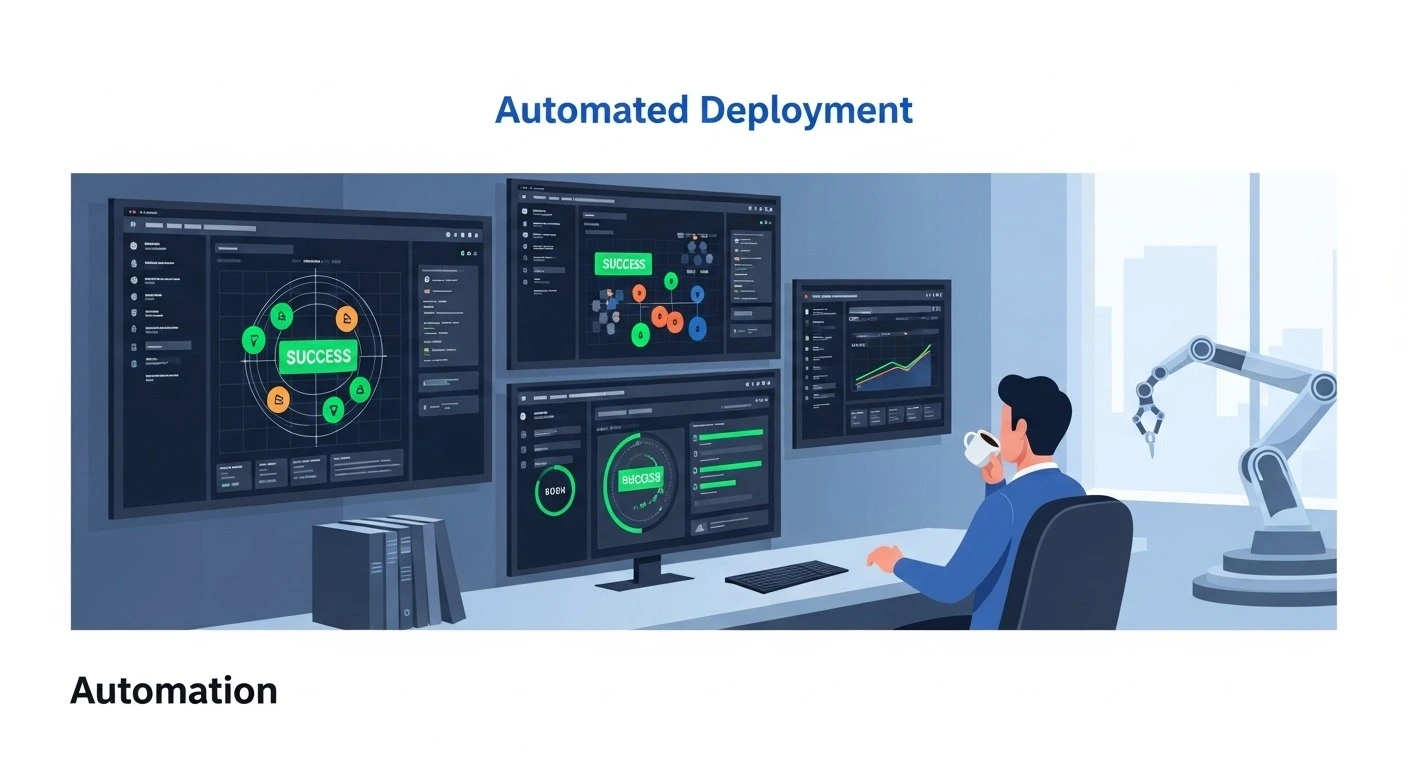
Let’s face it — DevOps isn’t what it used to be. Gone are the days of manual deployments, endless server configurations, and “it works on my machine” excuses. Today, cloud-native tools like Kubernetes and Terraform define how software moves from code to production. They’re more than just tools — they’re the backbone of automation, scalability, and collaboration. If you’re pursuing a DevOps certification, mastering Kubernetes and Terraform is no longer optional. It’s your ticket to building systems that scale effortlessly and recover instantly — skills every modern IT team needs.
2. Understanding the Modern DevOps Certification Landscape
The DevOps ecosystem has been evolving rapidly, focusing more on practical skills than just theory. Nowadays, a typical certification combines essentials like cloud management with AWS, Azure, or Google Cloud, container orchestration with Kubernetes, infrastructure automation using Terraform or Ansible, and building CI/CD pipelines with tools like Jenkins, GitHub Actions, or Azure DevOps. These elements aren’t just random; they’re the foundation of modern IT operations. Think of it like learning to drive — a course that skips Kubernetes and Terraform is missing the steering wheel in the journey.
A typical certification now blends:
- Cloud management using AWS, Azure, or Google Cloud
- Container orchestration with Kubernetes
- Infrastructure automation with Terraform or Ansible
- CI/CD pipelines using Jenkins, GitHub Actions, or Azure DevOps
3. Manual Infrastructure vs. Automation: Why Terraform Is a Game-Changer
Imagine setting up 50 servers manually — configuring IPs, user permissions, firewall rules, and storage volumes one by one. It’s time-consuming, error-prone, and mentally exhausting. That’s exactly what engineers dealt with in the pre-automation era. Terraform transformed how teams think about infrastructure by treating it like software. Instead of logging into individual servers and performing manual setup, you can now define your entire infrastructure in clean, readable code.
With Terraform, engineers write declarative configuration files that describe what the infrastructure should look like — servers, load balancers, databases, networks, and security policies. Once defined, Terraform automatically provisions and configures everything exactly as specified. Whether you’re setting up one virtual machine or hundreds across different clouds, it happens consistently and predictably every single time.
The impact is enormous:
- Time savings: What once took hours of manual work can now be done in minutes.
- Predictability: Terraform’s state management ensures your environments remain in sync with your configuration files.
- Reusability: You can reuse infrastructure templates across teams or projects.
- Safety: With built-in plan and apply steps, Terraform shows you changes before executing them, minimizing risks and mistakes.
4. Kubernetes in DevOps Certification: The Engine Behind Scalable Cloud Deployments
Let’s talk about Kubernetes, or “K8s” as it’s affectionately known. In a world where businesses push updates daily, managing hundreds of microservices manually is chaos. Kubernetes takes that chaos and turns it into choreography. Think of it like an orchestra conductor — ensuring each container (your app’s building blocks) runs in harmony, scales when needed, and heals when something fails.
- Apps automatically restart if a node crashes.
- Resources scale up during traffic surges.
- Deployments happen seamlessly, without downtime.
This is why Kubernetes has become non-negotiable in every DevOps certification and Microsoft DevOps certification pathway — it’s the core of cloud-native deployment.
5. Terraform: The Infrastructure as Code Revolution
If Kubernetes handles how applications run, Terraform decides where they run. Together, they automate both the platform and the underlying infrastructure — enabling a seamless, scalable DevOps workflow. Terraform represents the Infrastructure as Code (IaC) revolution, where manual setup and configuration are replaced with version-controlled, declarative code.
Terraform empowers DevOps engineers to:
- Define infrastructure in code — create, modify, and replicate environments using .tf files.
- Integrate across multiple clouds — work with AWS, Azure, and Google Cloud.
- Track every change through version control — store updates in Git for rollbacks and audits.
6. How Kubernetes and Terraform Work Together
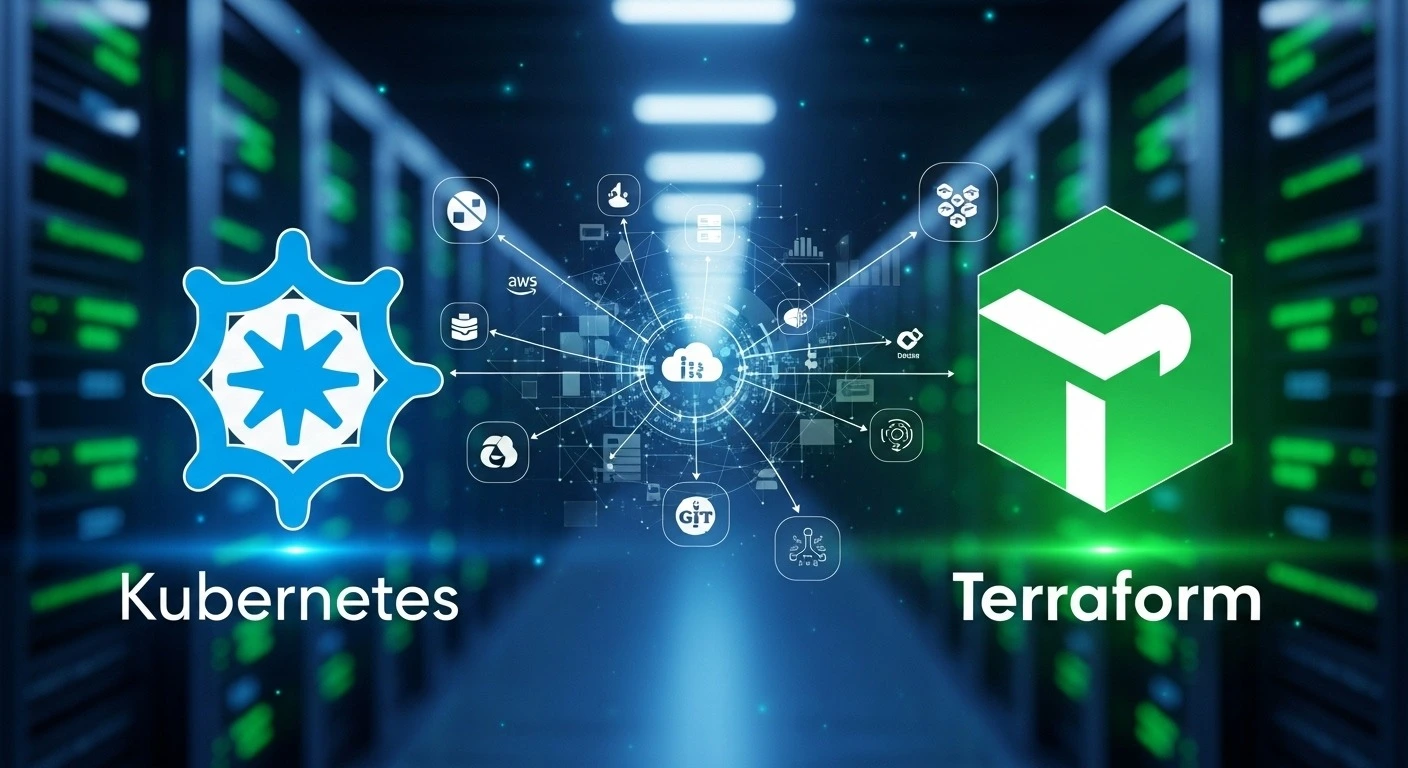
The real magic of modern DevOps happens when Kubernetes and Terraform work in harmony. Terraform builds the world your applications live in, and Kubernetes ensures those applications thrive within it. Terraform provisions everything — networks, load balancers, and Kubernetes clusters — across clouds. Once the environment is ready, Kubernetes takes over, deploying and managing containerized applications with precision.
Typical workflow:
- Terraform sets the stage — spins up cloud infrastructure and a Kubernetes cluster.
- Kubernetes brings it to life — applications are deployed as pods and managed for scaling and self-healing.
- Continuous updates and rollbacks — developers push new versions; Kubernetes and Terraform handle deployment and infrastructure adjustments.
| Workflow Stage | Terraform’s Role | Kubernetes’ Role |
| Environment Setup | Creates VMs, networks | N/A |
| Application Deployment | Configures clusters | Deploys containers |
| Scaling | Adjusts infrastructure | Scales pods |
| Monitoring | Cloud-level | Pod-level |
7. Why Employers Prioritise Kubernetes & Terraform Skills
A quick glance at job boards says it all — over 70% of DevOps job listings now mention Kubernetes. More than half reference Terraform. Employers want problem solvers who can build, automate, and scale.
- Real-world Kubernetes deployment experience
- Understanding of IaC concepts with Terraform
- Ability to integrate CI/CD pipelines
- Multi-cloud experience
In India, top companies prefer candidates with Kubernetes and Terraform exposure as part of their DevOps certification roadmap.
8. DevOps Certification Roadmap: Integrating Kubernetes and Terraform
If you’re planning your certification journey, here’s how Kubernetes and Terraform fit in.
| Learning Stage | Core Focus | Tools/Concepts |
| Foundation | Learn CI/CD basics | Jenkins, GitHub Actions |
| Automation | Infrastructure as Code | Terraform |
| Orchestration | Container management | Kubernetes |
| Cloud Integration | Multi-cloud deployment | AWS, Azure, GCP |
| Security & Monitoring | Observability | Prometheus, Grafana |
Pro Tip: Start with an Online DevOps course that includes hands-on Kubernetes and Terraform labs. Practical exposure matters more than theory here.
9. Comparison Table: Traditional DevOps vs. Modern Kubernetes-Terraform Workflow
| Aspect | Traditional DevOps | Kubernetes + Terraform |
| Workflow | Manual or semi-auto | Fully automated |
| Scalability | Limited | Dynamic |
| Cloud Support | Single-cloud | Multi-cloud |
| Rollback | Risky | Safe and instant |
| Maintenance | Labour-intensive | Self-healing |
| Resource Use | Static | Optimised |
| Cost | High | Controlled |
Kubernetes and Terraform don’t just change workflows — they redefine how DevOps engineers think about reliability and performance.
10. FAQs
Q1. Are Kubernetes and Terraform required for DevOps certification?
Yes, most modern certifications include both, as they represent key DevOps automation and orchestration tools.
Q2. Can beginners learn Kubernetes and Terraform easily?
Absolutely. Many Online DevOps courses now teach them through guided projects.
Q3. Which certification covers both Kubernetes and Terraform?
Many programs — including Microsoft and AWS DevOps certifications — cover Kubernetes and Terraform. At Paperlive Learning, our DevOps certification offers hands-on training in both tools.
Q4. What’s the benefit of Terraform over other IaC tools?
Terraform is cloud-agnostic, meaning you can deploy across AWS, Azure, or GCP using the same syntax.
Q5. How do Kubernetes and Terraform work together?
Terraform builds infrastructure; Kubernetes runs and manages applications on it — forming a complete DevOps cycle.
11. The New Standard for DevOps Excellence
The DevOps world is shifting — from manual operations to automated, intelligent systems. At the centre of that shift are two tools: Kubernetes and Terraform. These are no longer optional add-ons to your skillset; they’re essential to building cloud-native, resilient systems that scale effortlessly. For professionals in India aiming to future-proof their careers, mastering Kubernetes and Terraform through a recognised DevOps certification is more than a learning step — it’s a strategic investment in staying relevant.
Ready to master Kubernetes & Terraform?
So, whether you’re enrolling in an Online DevOps course, exploring DevOps online training, or charting your DevOps roadmap, make sure these two names sit right at the top of your toolkit.
✨ Enroll today: PaperLive Learning
Paperlive Learning
Learn why Kubernetes and Terraform power automation, scalability, and cloud success.