
Table of Contents
How Multi-Cloud and Gen AI Are Reshaping Online DevOps Certification
Introduction
Here's the thing about tech: it moves fast. Remember when companies could get by with one cloud platform and maybe a couple of automation tools? Those days are long gone. Organizations now run AWS here, Azure there, and Google Cloud over there — all while experimenting with Generative AI to automate tasks, predict issues, and ship faster.
If you're in DevOps — or planning to jump in — you’re standing at an incredible intersection of cloud computing, automation, and AI innovation. Employers now expect engineers who can design and manage multi-cloud environments, integrate AI-driven workflows, and establish delivery pipelines that scale with modern demands. A strong DevOps certification acts as your GPS through this complex landscape: structured learning, hands-on labs, and proof that you can handle cloud + AI challenges.
And that's where a DevOps certification becomes more than just a resume booster. Think of it as your GPS through today's complex DevOps landscape. A solid certification provides structured learning, real-world hands-on experience, and proof that you can effectively tackle cloud and AI challenges.
In this article, let's talk about why certification matters more than ever, how multi-cloud and Gen AI are shaking things up, and what you can do to stay ahead of the curve.
Why DevOps Certification Still Matters in 2025
In a world full of tutorials and bootcamps, certifications still play a crucial role — they are a trust signal to hiring managers, a structured learning path for students, and often a gateway to higher salaries and better roles.
1. Employers Want Proof, Not Promises
Hiring managers see many resumes claiming Kubernetes, Terraform, or CI/CD skills. Certifications are a reliable proof that you’ve invested time in structured training and can contribute from day one.
That's where recognized certifications come in — AWS DevOps certification, Azure DevOps certification, and Microsoft DevOps certification. They're like a trust signal that says, "Hey, I've invested time in structured training and proven I know what I'm doing."
2. Self-Learning Is Great, But...
Self-study works for many, but staying consistent is tough. A structured program delivers roadmap, hands-on assignments, and mentorship — especially valuable when dealing with AI-driven monitoring or cross-cloud orchestration.
3. Show Me the Money (and Career Growth)
Certified professionals often earn more and progress faster. Hybrid cloud + AI skills are in demand for roles like Cloud DevOps Engineer, SRE, and Platform Engineer.
4. Stay Relevant or Get Left Behind
Certification programs update continually — for example, AWS integrating CodeWhisperer, Azure including GitHub Copilot in pipelines, and multi-cloud labs becoming standard. Certifications keep you current.
5. Map Your Career Journey
Certifications act as checkpoints: Entry-level (AWS DevOps), Intermediate (Azure + multi-cloud + AI), Advanced (AI-powered DevOps certifications for senior or architect roles).
The Rise of Multi-Cloud in DevOps Language
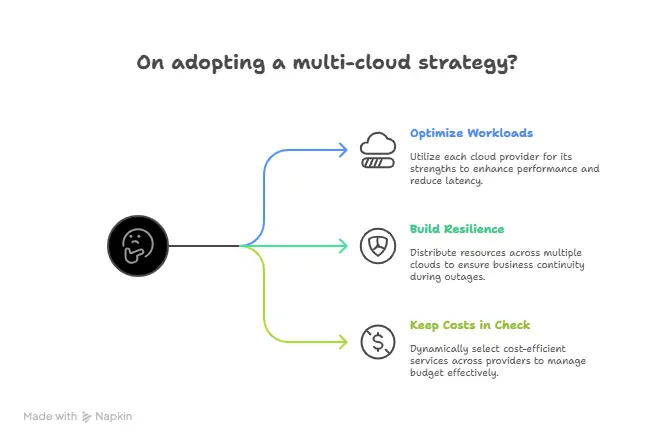
Multi-cloud is no longer optional — enterprises use multiple providers to maximize efficiency, resilience, and cost control. DevOps pros must handle deployments, monitoring, and optimization across clouds.
1. No more cloud silos
Knowing only one cloud provider is insufficient. Modern engineers are expected to manage hybrid workloads and cross-cloud infrastructure.
2. Certifications need to reflect reality
Certification programs now include multi-cloud workflows and labs that mirror enterprise setups, preparing learners for real-world complexity.
3. Get Real-World Practice
The best programs include scenario-based labs: cross-cloud Kubernetes clusters, multi-region microservices, and hybrid CI/CD pipelines — exercises that prepare you for enterprise challenges.
The Role of Generative AI in Modern DevOps
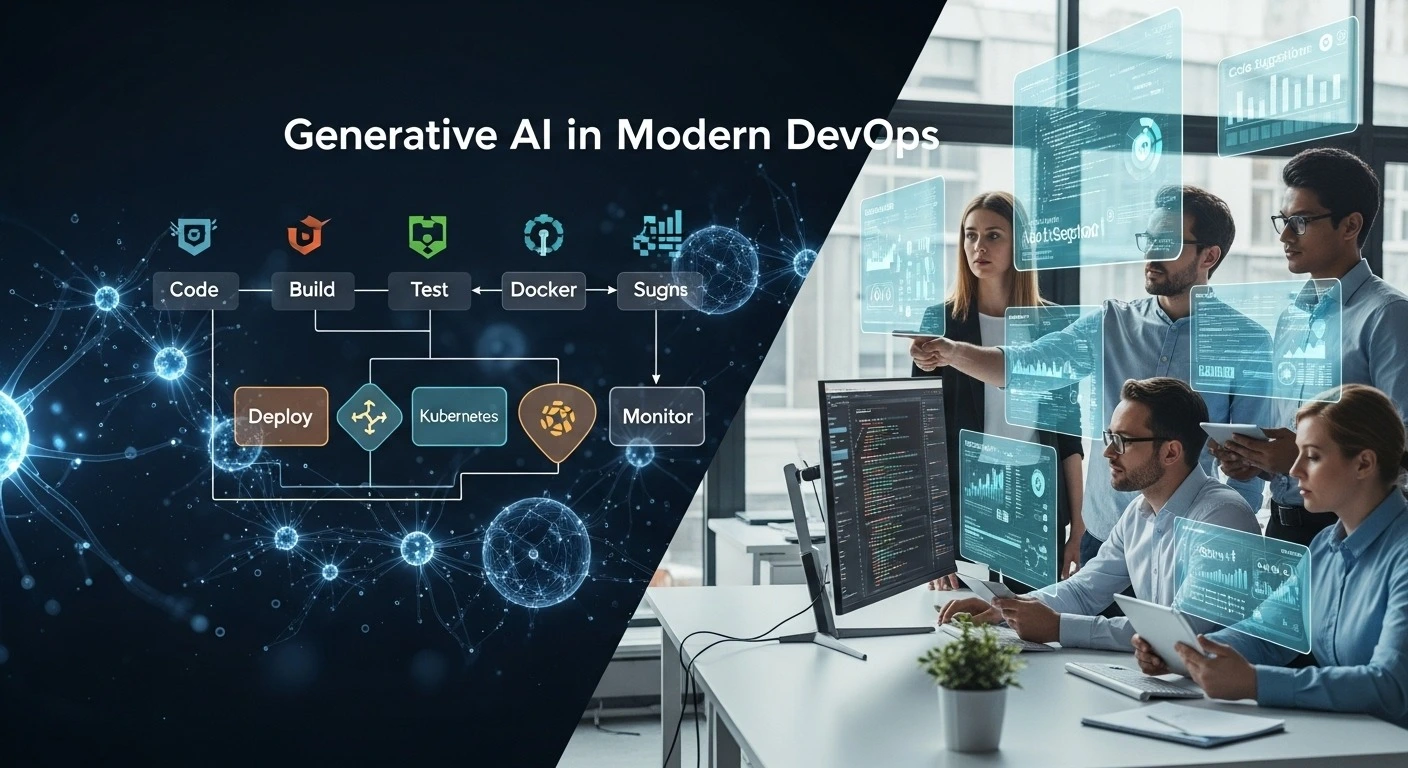
Generative AI Development Services are reshaping DevOps through predictive alerts, code generation, AI Call Assistant solutions, and infrastructure automation, making intelligence a core part of modern software delivery pipelines. Furthermore, as DevOps teams are increasingly tasked with supporting complex, consumer-facing generative applications like Seedance 2.0, building robust, AI-ready infrastructure has never been more critical.
1. AI-Driven Automation That Actually Works
Predictive pipeline management, automated IaC generation, and resource optimization are now practical through AI — helping teams anticipate failures and optimize costs.
2. Making DevOps Actually Smarter
AIOps principles — automated incident detection/remediation, code generation tools like GitHub Copilot, and predictive monitoring — make operations proactive instead of reactive.
3. What This Means for Your Career
AI knowledge is increasingly expected in senior DevOps roles. Professionals augmented with AI skills stand out — and courses now include AI modules or AI-enabled tools for modern pipelines.
Future-Proofing DevOps Careers in a Multi-Cloud, AI World
DevOps never stands still — from containers to microservices to cloud-native and now Gen AI. Certifications are an investment that helps you build a resilient, evolving skillset rather than chasing monthly trends.
1. How Certification Actually Future-Proofs You
Certification paths update regularly: AWS adding serverless AI labs, Azure including GitHub Copilot automation, and multi-cloud labs becoming common.
2. It Aligns with How Companies Hire
Recruiters filter using keywords; certifications help you pass initial screens and demonstrate structured learning.
3. It Builds Multi-Dimensional Skills
Good certifications teach tools, cloud strategy, automation, and AI integration — a holistic view needed in roles that blend SRE, Cloud, and Platform engineering.
Mapping Out Your DevOps Job Road Map
Typical progression:
- Entry-Level (0–2 years): Junior DevOps Engineer or Cloud Associate — start with fundamentals like Microsoft DevOps or AWS DevOps.
- Mid-Level (2–5 years): DevOps Engineer, Cloud DevOps Engineer — add Azure, multi-cloud, and AI integrations.
- Senior-Level (5+ years): Senior DevOps Engineer, SRE, Cloud Architect — AI-driven DevOps and cross-cloud orchestration become must-haves.
A Real-World Example
An enterprise is running a hybrid workload. Customer-facing apps are on AWS, backend processing is on Azure, and data analytics pipelines are on GCP.
A DevOps engineer without multi-cloud and AI training? They might struggle to keep everything running smoothly.
“You’ve got the mindset — now get the roadmap. Head to Best DevOps Training Online: A Complete Guide to Learning DevOps Tools
Conclusion: Your Anchor in a Fast-Moving World
DevOps certification provides structure, hands-on practice, and employer credibility — especially important in a world where multi-cloud and Gen AI are reshaping responsibilities. These certifications keep you relevant and ready for the next wave of cloud and AI-driven jobs.
The future formula for success is clear: multi-cloud knowledge + AI skills + trusted certification. That combination prepares you to automate, scale, and lead in modern IT organizations.
That's why certifications — whether it's an AWS DevOps certification, Azure DevOps course, or Microsoft DevOps certification — aren't optional extras anymore. They're your anchor in a sea of constant changing IT world
At PaperLive Learning, our programs blend multi-cloud expertise with AI-enabled DevOps skills to make you job-ready for 2025 and beyond.
✨ Explore: https://paperlive.in/devops-training-online
FAQs
Q1. Is DevOps certification worth it in 2025?
Yes — certification validates your ability to handle multi-cloud and AI-driven workflows.
Q2. Which certification should I start with: AWS or Azure?
Choose AWS if your target environment uses AWS; choose Azure for enterprise Microsoft stacks. Multi-cloud exposure is ideal long-term.
Q3. Can't I just self-learn?
Self-learning can work, but certifications provide structure, mentorship, and accountability that most self-learners miss.
Q4. What role does AI play?
AI augments automation — from predictive monitoring to IaC generation — and is increasingly part of certification curricula.
Q5. How does certification fit into the DevOps job roadmap?
Beginner → Microsoft DevOps certification | Mid-level → AWS + Azure + multi-cloud labs | Advanced → Multi-cloud + AI certifications for senior/architect roles.
PaperLive Learning
Blending multi-cloud expertise with AI-enabled DevOps skills for 2025.