
Table of Contents
Azure DevOps vs AWS DevOps: Which One You Should Learn in 2025?
1. Introduction
In today's rapidly evolving tech landscape, choosing the right DevOps platform can make or break your career trajectory. As we step into 2025, two giants dominate the DevOps space: Microsoft's Azure DevOps and Amazon's AWS DevOps ecosystem. Whether you're a seasoned developer looking to upskill or a newcomer deciding where to invest your time, this comparison will guide you through the strengths, limitations, and career prospects of both platforms.
With CI/CD practices, the DevOps market has experienced unprecedented growth. Industry reports indicate the global DevOps market is expected to reach $25.5 billion by 2028, creating immense opportunities worldwide. A critical understanding of AWS DevOps and Azure DevOps — their unique strengths, limitations, and career prospects — will shape an informed decision.
2. Understanding Azure DevOps
What is Azure DevOps?
Azure DevOps is Microsoft's comprehensive suite of development tools designed to support the entire software development lifecycle. Evolved from Team Foundation Server (TFS), Azure DevOps integrates project management, source control, build automation, testing, and deployment into a single platform. The platform consists of five main services: Azure Boards, Azure Repos, Azure Pipelines, Azure Test Plans, and Azure Artifacts.
Key Strengths of Azure DevOps
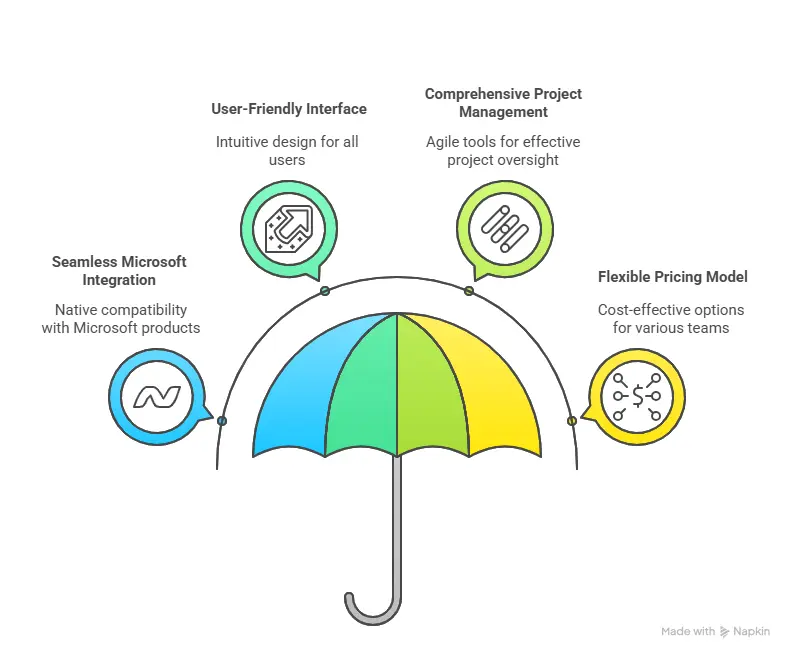
Seamless Microsoft Integration: Native integration with the Microsoft ecosystem makes Azure DevOps an attractive choice for organizations using Windows Server, SQL Server, .NET, and Office 365.
User-Friendly Interface: Azure DevOps offers both visual and YAML-based pipeline designers, delivering an intuitive user experience with strong visibility into build histories and deployment progress.
Comprehensive Project Management: Azure Boards excels for agile project management with sophisticated work item tracking, sprint planning, and dashboards.
Flexible Pricing Model: A generous free tier (including unlimited private repos and basic CI/CD for up to five users) makes Azure DevOps attractive for startups and small teams.
Career Prospects for Azure DevOps Professionals
Demand for Azure DevOps professionals has surged, particularly as organizations migrate to cloud-first strategies. Azure DevOps certification paths include AZ-400 (Microsoft Certified: DevOps Engineer Expert), AZ-204 (Azure Developer Associate), and AZ-305 (Azure Solutions Architect). Professionals with Azure expertise command competitive salaries depending on experience and location.
3. Understanding AWS DevOps
What is AWS DevOps?
AWS DevOps represents Amazon's approach to development operations, leveraging AWS's vast cloud infrastructure. Rather than a single integrated suite, AWS offers multiple specialized services that can be combined to build scalable solutions. Core AWS DevOps services include CodeCommit, CodeBuild, CodeDeploy, CodePipeline, CloudFormation, Lambda, and CloudWatch.
Key Strengths of AWS DevOps
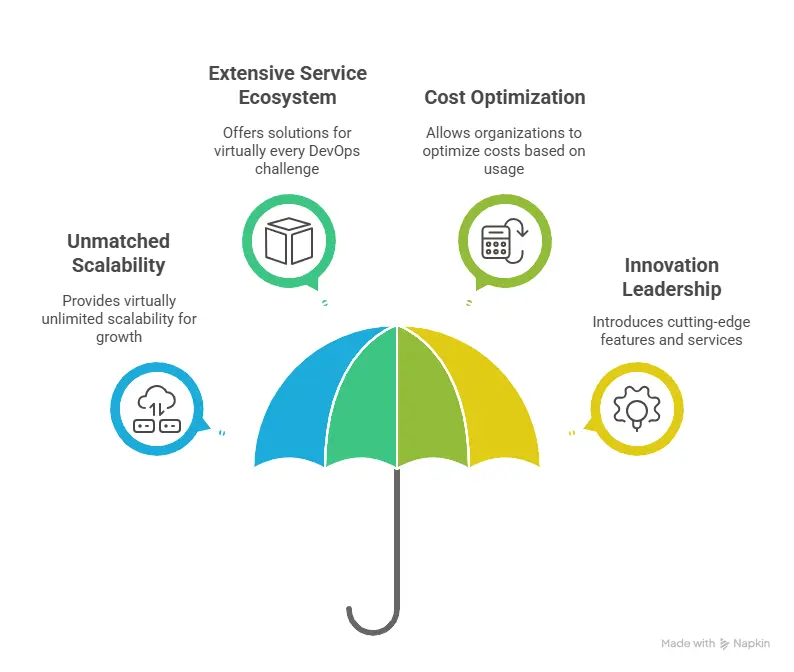
Unmatched Scalability: AWS's global infrastructure provides virtually unlimited scalability, making it ideal for startups and large enterprises alike.
Extensive Service Ecosystem: With hundreds of services, AWS covers almost every DevOps need, from machine learning to IoT.
Cost Optimization: AWS's pay-as-you-go model and features like spot instances help organizations optimize costs based on usage.
Innovation Leadership: AWS consistently rolls out new features, keeping DevOps teams at the cutting edge of cloud technologies.
Career Prospects for AWS DevOps Professionals
AWS DevOps professionals are in high demand due to AWS's market dominance. Popular AWS certifications include AWS Certified DevOps Engineer – Professional, AWS Certified Solutions Architect – Professional, and others. Certified professionals often command strong compensation, particularly in senior roles.
4. Key Differences Between Azure DevOps and AWS DevOps
Architecture and Approach
Azure DevOps offers an integrated suite experience, reducing context switching and simplifying collaboration. AWS provides a modular, service-oriented approach that offers flexibility and customization at the cost of steeper learning.
Learning Curve and Complexity
Azure DevOps generally has a gentler learning curve, especially for teams familiar with Microsoft technologies. AWS DevOps requires a broader understanding of multiple services, which increases complexity but also provides powerful options.
Integration Capabilities
Both platforms excel at integrations: Azure integrates tightly with Microsoft tools and has a marketplace of extensions, while AWS integrates broadly across its ecosystem and supports extensive custom integrations via APIs and Lambda.
5. Career Opportunities and Market Demand
Job Market Analysis
The DevOps job market is expanding rapidly, with both Azure and AWS skills in high demand. Azure opportunities are strong in enterprise organizations and sectors that rely on Microsoft technologies. AWS roles dominate startups and cloud-native companies.
Salary Expectations and Growth Potential
Compensation varies by geography and experience. Typical ranges (global) for entry to senior levels were provided in industry reports; in India, Azure and AWS roles show competitive salary bands with AWS generally commanding higher averages in many cases.
Freelancing and consulting opportunities are also robust — experienced consultants can command high monthly rates and hourly project fees in India.
Curious about Azure jobs roadmap, read our blog on - Over 60+ Azure DevOps Interview Questions and Answers to Prepare for 2025
6. Learning Paths and Certification Options
Azure DevOps Learning Journey
A structured Azure learning path starts with fundamentals (DevOps principles, Git basics, and simple Azure pipelines), moves to intermediate topics (advanced pipelines, ARM templates, security), and advances to enterprise-scale topics and architecture design. AZ-400 is the core DevOps certification for Azure.
The Azure DevOps certification (AZ-400) validates expertise in implementing DevOps practices and typically requires 5-8 months of hands-on experience for thorough preparation.
Explore more about Azure certifications, read our blog on - From Zero to Cloud Hero: How Azure DevOps Certification Can Kickstart Your IT Career (2025 Edition)
AWS DevOps Learning Journey
AWS learning begins with cloud fundamentals, CI/CD basics, and simple Code* services. Intermediate and advanced topics include CloudFormation, monitoring with CloudWatch, multi-account governance, and advanced deployment strategies. Professional-level AWS certifications typically require longer practical experience.
Know more about AWS training , read our blog on - How AWS DevOps Training Helps You Master Modern DevOps Workflows.
Choosing the Right Training Format
Options include self-paced online courses, trainer-led programs, intensive bootcamps, and hands-on labs. Regular practice in sandbox environments is key to success.
7. Cost opportunities & market demand
Cost structures differ: Azure DevOps offers a free tier and predictable pricing suitable for startups, while AWS DevOps costs are pay-as-you-go and can be optimized via reserved instances and spot pricing. Regional considerations (India regions) and enterprise agreements impact total costs.
Business value propositions vary: Azure emphasizes faster time-to-market and governance; AWS emphasizes scalability and innovation. For Indian SMEs and startups, both platforms present strong ROI when implemented correctly.

8. Which DevOps platform should you choose in 2025?
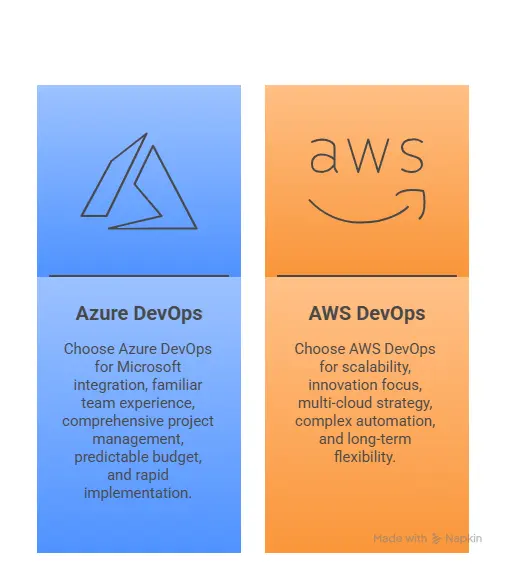
Choose Azure DevOps if your organization is Microsoft-centric, seeks rapid implementation, and prefers predictable pricing. Choose AWS DevOps if you need massive scalability, cutting-edge services, or multi-cloud flexibility. Many organizations adopt a hybrid approach using the strengths of both platforms.
- Choose Azure DevOps If:
- Organizational alignment with Microsoft technologies
- Teams familiar with Microsoft development tools
- Need for integrated project management and predictable costs
- Choose AWS DevOps If:
- Scalability requirements and variable workloads
- Desire for access to the latest cloud services
- Long-term flexibility and complex automation needs
9. Getting Started: Resources and Training Options
Immediate Action Steps
For Azure DevOps: create a free Azure DevOps organization, complete Microsoft Learn paths, build a simple pipeline, join community forums, and consider structured courses. For AWS DevOps: set up an AWS free tier account, complete AWS training, implement CodePipeline workflows, join AWS user groups, and explore official AWS courses.
Building Practical Experience
Project-based learning, open-source contributions, and personal projects deepen understanding. Document your journey with a portfolio demonstrating your implementations.
Community and Networking
Join LinkedIn groups, Reddit communities, attend conferences like AWS re:Invent or Microsoft Build, and participate in local meetups to network and learn from peers.
Reach out to your DevOps community , read our blog on - Why Networking Matters: Building Connections in the DevOps Community
10. Conclusion
The DevOps landscape in 2025 offers exceptional opportunities with both Azure DevOps and AWS DevOps. Align your platform choice with career goals, existing skillset, and market opportunities. Learning both platforms yields maximum flexibility and compensation potential.
Quick Decision Guide:
- Consider Azure for integrated tools and Microsoft environments.
- Consider AWS for scalability and cutting-edge features.
- Learn both for maximum career flexibility.
11. FAQs
1. Which is easier to learn: Azure DevOps or AWS DevOps?
Azure DevOps is generally easier due to its integrated interface; AWS offers more customization with a steeper learning curve.
2. Can I use both Azure DevOps and AWS DevOps in the same project?
Yes. Many organizations use Azure for project management and AWS for infrastructure, enabling hybrid workflows.
3. Which platform offers better career opportunities?
Azure is strong in Microsoft-centric enterprises; AWS dominates startups and cloud-native organizations and often offers higher salaries in many markets.
4. How long does it take to get certified?
Azure DevOps (AZ-400): 6–12 months. AWS DevOps professional-level: 12–18 months depending on experience and preparation.
5. What’s the cost difference?
Azure DevOps offers predictable monthly pricing with a free tier; AWS is pay-as-you-go and can be cost-effective when optimized.
6. Which platform is better for beginners?
Azure DevOps is often more beginner-friendly, while AWS provides broader cloud knowledge with more learning required.

Join Paperlive Learning for Azure and AWS DevOps courses. Visit Paperlive Learning: paperlive.in/devops-training-online
Rajat — DevOps Content Strategist
Helping students and IT professionals build high-growth cloud careers across AWS and Azure.